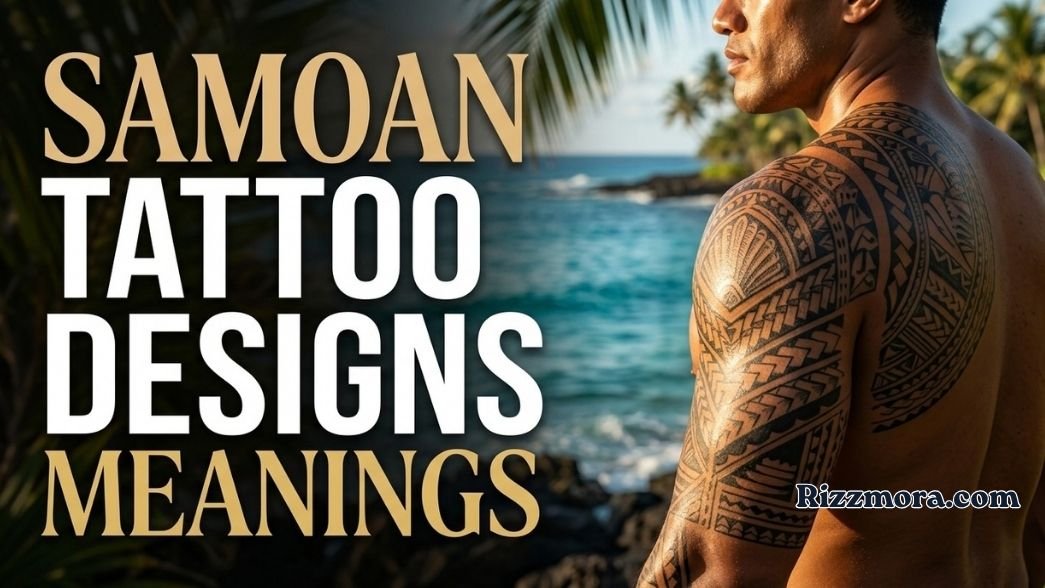
Imagine choosing a tattoo that represents your family, personal struggles, or the people who shaped your life. You might want something more meaningful than a beautiful pattern. That’s one reason people explore Samoan tattoo designs and their meanings: these traditional Polynesian tattoos can carry deep connections to family, identity, responsibility, and cultural heritage.
Samoan tattoo art is more than decorative body ink. Traditional designs often combine carefully arranged geometric patterns, lines, and symbols that relate to a person’s place within the community. Their meanings depend on the design, its placement, the cultural context, and the knowledge of the person creating it.
Interest in these tattoos continues to grow as people discover Polynesian art through social media, celebrity tattoos, and modern tattoo studios. Yet a striking design doesn’t always tell its full story. Some symbols have specific cultural associations, while others gain meaning from family traditions or an individual’s life experiences.
Understanding Samoan tattoo designs meanings requires looking beyond individual symbols and considering the traditions that give them significance. Whether you’re researching your heritage, exploring a possible tattoo, or simply curious about Polynesian body art, this guide explains the major designs, their cultural importance, and the respectful choices to make before getting inked.
Quick Answer: What Do Samoan Tattoos Mean?
Samoan tattoos are traditional forms of Polynesian body art that can represent family, identity, courage, service, protection, and responsibility. Their meanings depend on the patterns, placement, and cultural traditions behind them. Known as tatau in Samoan culture, these tattoos are closely connected to heritage, community, and personal commitment.
- Example 1: A person chooses a traditional malu to honor Samoan heritage and cultural identity.
- Example 2: Someone studies a pe’a to understand its connection to duty, service, and community.
Detailed Meaning Breakdown
Primary Meaning: Identity, Family, and Responsibility
The central meaning of traditional Samoan tattooing is not captured by one symbol. Instead, its significance comes from the complete design, the person wearing it, and the cultural traditions surrounding the tattoo.
In Samoan society, family and community are deeply connected. The Samoan concept of aiga, meaning family or extended family, helps explain why traditional tattoos can represent relationships and obligations that extend beyond the individual.
Traditional tattooing can also express commitment, endurance, service, and belonging. For many Samoans, it connects personal identity with responsibilities to family and community.
Secondary Meanings: Courage, Strength, and Protection
Certain patterns are commonly associated with qualities such as strength, perseverance, and protection. However, these associations shouldn’t be treated as a universal dictionary in which every shape has one fixed meaning.
Geometric arrangements, repeated lines, and carefully placed motifs work together to create a larger visual composition. A tattoo’s significance may come from its overall structure rather than one isolated mark.
For example, a wearer might associate a particular design with overcoming hardship or honoring an elder. That personal meaning can be genuine without being the sole traditional interpretation of the pattern.
Rare or Misinterpreted Meanings
One common mistake is assuming that every Samoan tattoo symbol has a precise, universally accepted translation.
Some contemporary tattoo guides assign simple meanings to individual shapes, but traditional interpretations can be more complex. Meanings may vary by family, practitioner, regional tradition, and the specific design.
Another misconception is that Samoan tattooing is interchangeable with all Polynesian tattoo styles. Samoa, Tonga, Tahiti, Hawaiʻi, and Māori communities have distinct histories and artistic traditions, even though cultural connections exist across the Pacific.
The most reliable interpretation comes from cultural context, not a generic symbol list.
What Samoan Tattoos Mean in Different Contexts
In Traditional Samoan Culture
Traditional Samoan tattooing is closely linked to social identity, family relationships, and community responsibilities.
The pe’a, traditionally worn by men, is a substantial tattoo extending from the waist or midsection toward the knees. It is associated with cultural identity, discipline, service, and commitment. Receiving a pe’a has traditionally involved a demanding process and significant responsibilities.
The malu, traditionally worn by women, is generally a more delicate tattoo extending from the upper thighs toward the knees. It is associated with cultural identity and women’s roles in Samoan society, including service and community responsibilities.
These tattoos aren’t simply male and female fashion alternatives. They carry histories and cultural expectations that deserve careful understanding.
On Social Media Platforms
Instagram, TikTok, Pinterest, and other visual platforms have made Samoan tattoo designs easier to discover. People share photographs of traditional patterns, contemporary interpretations, and tattoos inspired by Polynesian art.
A caption might describe a tattoo as a tribute to family or a connection to ancestral roots. Such explanations can help communicate personal meaning, but they don’t automatically establish the traditional meaning of every pattern shown.
When browsing online, pay attention to who is sharing the design. A Samoan cultural practitioner explaining a traditional pattern may offer context that a general tattoo inspiration account cannot.
In Dating and Relationships
Samoan tattoos can carry personal meaning in romantic relationships, especially when they honor family heritage or shared experiences.
For example, someone might incorporate a meaningful design into a broader expression of cultural identity before marriage or parenthood. However, traditional Samoan tattoos aren’t inherently romantic, and they shouldn’t automatically be interpreted as signs of loyalty or relationship status.
A tattoo’s meaning belongs to the wearer and its cultural context. It’s better to ask respectfully than to make assumptions based on appearance.
In Professional Communication
Samoan tattoos may appear in professional settings, including workplaces, cultural organizations, education, and public service.
Their visibility doesn’t tell you everything about a person’s beliefs, personality, or professional abilities. A traditional tattoo may reflect heritage, family history, or cultural responsibilities.
For employers and colleagues, the respectful approach is straightforward: judge people by their work and conduct rather than making assumptions about their tattoos.
Cultural and Regional Differences
Samoan tattoo traditions developed within a specific cultural setting. While related Polynesian communities share some broader artistic influences, their tattooing traditions aren’t identical.
Modern Samoan communities also vary in how they approach traditional tattooing. Some people receive traditional tattoos as part of a strong cultural commitment, while others appreciate the art without choosing to undergo the practice themselves.
Diaspora communities may interpret and express their heritage in ways that reflect life between Samoa and other countries. That doesn’t make their cultural connection less meaningful.
Where Are Samoan Tattoos Used?
Samoan tattooing is a cultural practice rather than a communication abbreviation, so it isn’t meaningfully categorized by messaging platform. Today, however, traditional and contemporary designs appear in several settings.
- Social media 👻: People share personal stories about heritage, family, and traditional tattoo experiences.
- TikTok 🎵: Videos may document tattoo sessions, explain cultural background, or showcase finished designs.
- Instagram DMs 📩: Users may contact tattoo artists to ask about portfolios, consultation appointments, and cultural knowledge.
- WhatsApp 💬: Families may exchange tattoo photographs, discuss cultural traditions, or coordinate consultations.
- Gaming chats 🎮: Players with Polynesian-inspired character designs may discuss patterns, although fictional artwork doesn’t necessarily reflect authentic Samoan tattoo traditions.
In formal cultural settings, traditional tattooing should be discussed with care and accurate context. Casual conversations can be relaxed, but cultural sensitivity still matters.
Spiritual, Numerology, and Cultural Meaning
Cultural Significance Comes First
Samoan tattooing has deep cultural significance, but it shouldn’t automatically be classified as numerology or a system of mystical symbols.
Its meaning is more closely connected to heritage, identity, social responsibility, and cultural practice. Individual wearers may also attach spiritual or personal significance to their tattoos, depending on their beliefs and experiences.
Some people describe their tattoos as a source of strength or a reminder of their ancestors. These personal interpretations deserve respect, but they shouldn’t be presented as beliefs shared by every Samoan person.
Is There a Universal Spiritual Meaning?
No single spiritual meaning applies to every Samoan tattoo.
The significance of a pe’a or malu is rooted in Samoan cultural history and the traditions associated with receiving and wearing it. A contemporary tattoo inspired by Samoan patterns may have a different personal meaning from a traditional tattoo received within a cultural setting.
If spiritual meaning matters to you, discuss it with a knowledgeable Samoan practitioner rather than relying on generalized claims about energy, luck, or protection.
Tone, Identity, and Why People Choose Samoan Tattoos
Why People Choose Them and What They Communicate
For many wearers, a traditional Samoan tattoo is a visible expression of belonging. It can connect the wearer with family, ancestors, community, and a cultural history that continues across generations.
Others are drawn to the craftsmanship. Traditional Samoan tattoo designs use intricate arrangements of geometric forms, dense patterns, and carefully balanced spaces. The result can be visually striking without relying on realistic pictures or portraits.
I often find that the most meaningful distinction is between appreciating an art form and understanding the commitment behind it. Admiring the appearance is a starting point, but learning about the tradition gives that appreciation greater depth.
The Emotional Meaning Behind Different Choices
A tattoo’s emotional meaning depends on the individual and the circumstances surrounding it.
- Pride: A wearer may feel connected to Samoan ancestry and family history.
- Resilience: The tattoo may remind someone of personal challenges or a difficult period in life.
- Belonging: It may reflect the importance of community and cultural identity.
- Responsibility: A traditional tattoo can carry expectations about service, conduct, and commitment.
- Remembrance: A contemporary design may honor relatives or preserve memories of loved ones.
These emotions can overlap. Someone may feel pride in their heritage while also recognizing the responsibilities associated with their tattoo.
The design alone, however, cannot tell an outsider exactly what the wearer feels.
10 Examples of Samoan Tattoo Designs and Their Meanings
The following examples explain common design categories and cultural associations. They aren’t a universal translation key: exact meanings depend on the complete design, its traditional context, and the knowledge of the practitioner.
1. Pe’a
Design: A traditional, extensive tattoo worn by men, covering the midsection and extending toward the knees.
Meaning: The pe’a is associated with Samoan identity, commitment, service, and social responsibility. Its significance extends beyond its appearance to the cultural process and obligations surrounding it.
2. Malu
Design: A traditional tattoo worn by women, generally extending across the thighs toward the knees.
Meaning: The malu is associated with Samoan heritage and women’s roles in cultural and community life. It should not be reduced to a decorative alternative to the pe’a.
3. Geometric Bands
Design: Repeating bands of geometric shapes arranged around an arm or leg.
Meaning: These patterns can create structure and visual continuity. Their exact significance depends on their traditional context; a band doesn’t automatically mean strength or protection.
4. Repeating Triangular Motifs
Design: Rows of triangles or pointed geometric forms.
Meaning: Triangular motifs appear in many Polynesian art traditions. Their interpretation depends on the particular design and cultural source, so it’s best not to assign one universal meaning.
5. Ocean-Inspired Patterns
Design: Flowing lines and repeating forms that suggest waves or movement.
Meaning: The ocean has a profound place in the lives and histories of Pacific Island communities. An ocean-inspired contemporary tattoo may represent navigation, connection, or personal journeys, but the specific meaning depends on the wearer and design.
6. Turtle-Inspired Designs
Design: A turtle shape or a pattern influenced by marine life.
Meaning: Turtles are significant in various Pacific cultural traditions, but their meanings differ between communities. A turtle tattoo inspired by Polynesian art should not automatically be described as a traditional Samoan symbol with one fixed interpretation.
7. Shark-Tooth Motifs
Design: Repeating pointed shapes inspired by shark teeth.
Meaning: Shark-tooth motifs occur across several Polynesian visual traditions. Modern wearers may associate them with strength or resilience, but the precise meaning depends on the cultural tradition and arrangement.
8. Ankle and Lower-Leg Patterns
Design: Geometric bands or flowing patterns positioned around the ankle or lower leg.
Meaning: Placement affects the overall appearance and may matter to the design’s cultural context. A lower-leg tattoo inspired by Samoan patterns isn’t automatically equivalent to part of a traditional pe’a.
9. Shoulder and Upper-Arm Designs
Design: A broad arrangement of geometric motifs extending across the shoulder and upper arm.
Meaning: Modern tattoo artists often adapt Polynesian-inspired patterns to fit the body’s shape. Such work may represent family, identity, or personal growth, but those associations should be distinguished from documented traditional meanings.
10. Contemporary Heritage Tattoos
Design: A personalized arrangement combining geometric patterns with meaningful dates, names, or other imagery.
Meaning: Contemporary tattoos can honor family history or personal experiences. When a design incorporates Samoan motifs, its creator should understand which elements come from the tradition and which are personal additions.
Where Misunderstandings Happen
Context Confusion
A frequent misunderstanding occurs when people assume that every geometric pattern has a direct English translation.
Traditional designs work as complete compositions, not always as collections of independent symbols. Removing one motif from its original setting can change how it is understood.
A generic online diagram may be useful for inspiration, but it cannot replace a knowledgeable explanation of a traditional design.
Generational Differences
Older and younger Samoans may have different experiences with tattooing, particularly across generations living in Samoa and overseas.
Some people emphasize established cultural practices and the responsibilities that accompany traditional tattoos. Others explore contemporary interpretations that connect heritage with modern personal expression.
Neither perspective should be generalized to every family. Cultural knowledge is best learned through respectful conversation rather than assumptions about age.
Platform Differences
Social media encourages short captions and striking photographs. That format can make complex traditions look simpler than they are.
A video showing the tattooing process may provide valuable insight, but a brief clip rarely explains the full cultural history. Likewise, a photograph of a finished tattoo cannot establish whether it is traditional, adapted, or simply inspired by Polynesian art.
Look for explanations from credible cultural practitioners, not just visually appealing images.
Also Read This: What Does LLS Meaning in Text
Similar Tattoo Styles, Symbols, and Cultural Terms
The following comparison helps distinguish Samoan tattooing from related traditions and commonly discussed motifs.
| Term | Meaning | How It Differs from Samoan Tattooing |
|---|---|---|
| Pe’a | Traditional Samoan tattoo associated with men | A specific Samoan tattoo tradition |
| Malu | Traditional Samoan tattoo associated with women | A distinct design and cultural practice |
| Tatau | Samoan term for tattooing or tattoo | Refers to the practice rather than one particular design |
| Ta moko | Traditional Māori tattooing | Belongs to Māori cultural traditions in Aotearoa New Zealand |
| Kākau | Hawaiian term associated with tattooing | Belongs to Hawaiian cultural and linguistic traditions |
| Polynesian tattoo | Broad description of tattoo traditions across Polynesia | An umbrella term, not one unified style |
| Marquesan tattoo | Tattoo tradition associated with the Marquesas Islands | Has its own distinctive artistic history and motifs |
| Tribal tattoo | Broad modern label for bold, often geometric tattoo styles | Can be vague and may obscure specific cultural origins |
| Geometric tattoo | Tattoo built from shapes, lines, and repeated forms | Describes a visual style rather than a particular culture |
The main lesson is that visual similarities don’t make different traditions interchangeable. Identifying the cultural origin of a design is a better starting point than choosing a label based only on appearance.
When Not to Choose a Samoan Tattoo Design
Cultural Risks
Avoid choosing a traditional design solely because it looks attractive. The pe’a and malu have specific cultural significance, and their importance goes beyond their visual appearance.
If you aren’t Samoan, take time to learn about the tradition before deciding whether a tattoo inspired by it is appropriate for you. Ask a knowledgeable Samoan tattoo practitioner about cultural boundaries and whether a proposed design would misrepresent a traditional practice.
Respectful appreciation starts with listening, not assuming that every pattern is available for unrestricted use.
Risks of Misrepresenting the Tradition
Be cautious about tattoo artists who claim that every motif has a simple, universally accepted meaning without explaining their source.
Don’t assume that combining symbols from Samoa, Māori culture, and Hawaiʻi creates an authentic Polynesian design. Each tradition deserves to be understood on its own terms.
Risks of Choosing Too Quickly
Traditional tattooing can involve substantial physical discomfort, expense, and long-term commitment. Even a smaller contemporary tattoo deserves careful consideration because removal can be costly and incomplete.
Research the artist’s experience, hygiene practices, healing guidance, and understanding of the design before booking an appointment.
Expert Tips for Understanding Samoan Tattoos Correctly
Use these practical tips when researching traditional Samoan tattoo designs and their meanings.
- Learn the cultural background first. Understand the difference between the pe’a, malu, and contemporary Polynesian-inspired tattoos.
- Ask about the complete design. Individual motifs may not have fixed meanings outside their broader context.
- Consult a knowledgeable Samoan practitioner. Cultural knowledge and practical tattooing experience are both valuable.
- Distinguish tradition from personal symbolism. A modern tattoo can have personal meaning without representing an established Samoan belief.
- Avoid mixing traditions casually. Research the origin of motifs before combining them.
- Consider placement carefully. Placement can affect the design’s visual balance and cultural interpretation.
- Check the artist’s portfolio. Look for clear explanations of cultural influences and examples of relevant experience.
- Understand the commitment. Traditional tattooing may involve significant time, discomfort, healing, and cultural responsibilities.
- Choose a reputable studio. Confirm that appropriate hygiene procedures, sterile equipment, and aftercare guidance are provided.
- Take time before deciding. A design that remains meaningful after careful research is a better choice than one selected on impulse.
A good tattoo consultation should leave you with a clearer understanding of the artwork, not simply a price and an appointment date.
Frequently Asked Questions
1. What do Samoan tattoo designs mean?
Samoan tattoo designs can express cultural identity, family connections, responsibility, service, and belonging. Their meanings depend on the tattoo tradition, the complete pattern, and its context. Traditional tattoos such as the pe’a and malu have specific cultural significance, while contemporary designs may also incorporate personal experiences or individual interpretations.
2. What is the difference between a pe’a and a malu?
The pe’a is a traditional Samoan tattoo generally worn by men, extending from the midsection toward the knees. The malu is traditionally worn by women and usually covers the thighs toward the knees. Both connect to Samoan cultural identity, but they have distinct designs, histories, and social associations.
3. What do Samoan tribal tattoo patterns symbolize?
There isn’t one universal meaning for all Samoan patterns. Geometric forms, repeating lines, and other motifs contribute to a larger design whose significance depends on cultural context. Some modern wearers associate their tattoos with resilience, family, or protection, but these personal interpretations shouldn’t automatically be treated as traditional meanings.
4. Can anyone get a Samoan tattoo?
People outside Samoan culture can appreciate its art, but receiving a traditional tattoo raises questions of cultural understanding, respect, and responsibility. If you’re considering one, speak with a knowledgeable Samoan practitioner about the specific design and its significance. A contemporary tattoo inspired by Polynesian aesthetics should be clearly distinguished from a traditional cultural practice.
5. Do Samoan tattoos have spiritual meanings?
They may carry spiritual or personal significance for individual wearers, but there is no single spiritual interpretation that applies to every Samoan tattoo. Their established cultural significance is closely connected to heritage, identity, community, and responsibility. Ask a knowledgeable practitioner about the particular tradition rather than relying on generalized claims about mystical powers.
6. What do Samoan tattoos on the arm or shoulder mean?
Arm and shoulder tattoos may be contemporary designs inspired by Samoan geometric patterns, but placement alone doesn’t establish a specific meaning. The interpretation depends on the motifs, their arrangement, and the tradition they draw from. A design created for personal expression may communicate family pride or resilience without representing a traditional Samoan tattoo.
7. How much does a Samoan tattoo cost?
The price depends on the tattoo’s size, complexity, artist’s experience, location, and time required. Extensive traditional work may require multiple sessions and a substantial financial commitment. Ask the artist for a consultation and a clear estimate before proceeding. Cultural understanding, hygiene, and craftsmanship should matter as much as price.
8. How can I choose a meaningful Samoan tattoo design?
Start by identifying what you want to express and whether you have a personal or family connection to Samoan culture. Research the distinction between traditional and contemporary designs, then consult a knowledgeable practitioner. Make sure you understand the design’s origins, placement, practical commitment, and cultural significance before making a permanent decision.
Final Summary & Smart Usage Advice
Samoan tattoos are much more than intricate patterns on the skin. They can express heritage, identity, family connections, community responsibilities, and personal commitment. Understanding their meaning requires looking at the cultural tradition behind the artwork rather than assigning a simple definition to every shape.
The pe’a and malu are particularly important examples of traditional Samoan tattooing. Both carry cultural significance that extends beyond their appearance, and neither should be treated as merely a decorative style.
Contemporary tattoos inspired by Samoan art can also communicate personal stories, family pride, and resilience. However, personal symbolism isn’t automatically the same as traditional cultural meaning. Recognizing that distinction helps people appreciate the artwork without oversimplifying its history.
If you’re considering a tattoo, research the design, consult a knowledgeable practitioner, and think carefully about its cultural origins. Ask questions about placement, traditional associations, and whether the proposed artwork accurately represents the tradition it draws from. Take time to consider the physical, financial, and personal commitment involved.
If you’re simply exploring the subject, remember that respectful curiosity is a good starting point. Learning about Samoan tattooing can offer a deeper appreciation of the people, history, and values connected to the art.
The key takeaway: Understand the culture behind the pattern before making the pattern part of your story.

Hi, I’m David Martinez, an author at RizzMora with experience writing about texting slang, online expressions, and social media terminology. I like keeping my explanations straightforward so readers can quickly find the meaning they need.
One thought on “Samoan Tattoo Designs Meanings? Meaning, Context, Examples, and Modern Usage (2026 Guide)”