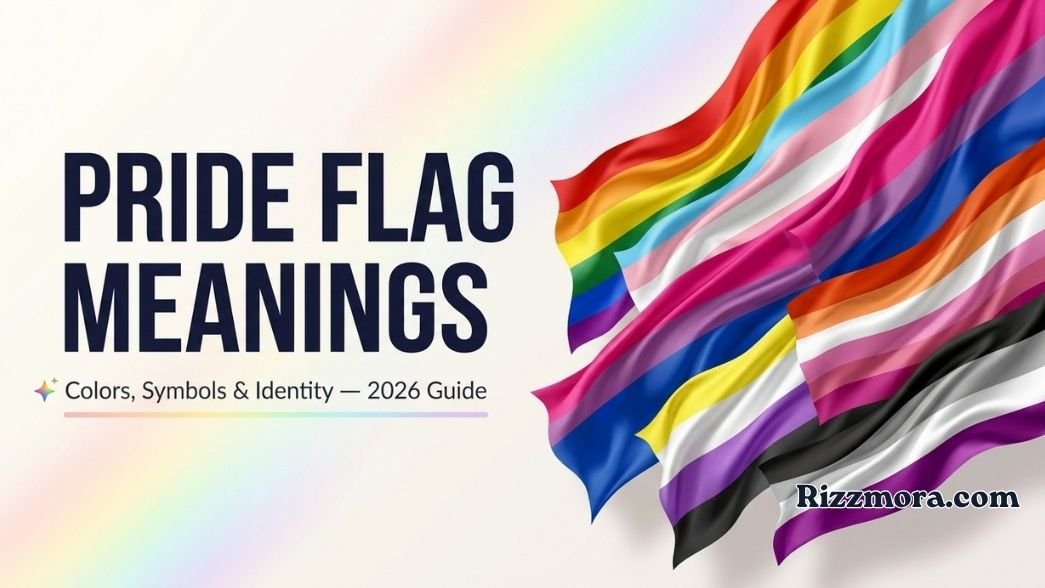
Imagine walking through a neighborhood in June and seeing a rainbow flag hanging outside a bookstore. Later, you notice a different flag with pink, purple, blue, white, and yellow stripes on someone’s social media profile. You might recognize the rainbow design but wonder what the other colors represent. That’s where understanding pride flag meanings becomes helpful.
Pride flags are colorful symbols that represent LGBTQ+ identities, communities, history, and the ongoing effort to create a world where everyone can live openly and safely. Although the rainbow flag is the best-known design, many other flags represent specific sexual orientations, gender identities, and experiences.
People search for these symbols because they encounter them at Pride events, on social media, in schools, and in everyday life. New designs also become more visible as conversations about identity grow, and older flags continue to carry deep personal and historical meaning.
Each flag tells a slightly different story. Some celebrate attraction, some express gender identity, and others highlight inclusion, visibility, or community pride. The colors aren’t always self-explanatory, either, and their meanings can vary slightly depending on the flag’s history.
This guide explains the most recognizable designs, what their colors represent, how people use them, and how to understand them respectfully without making assumptions about anyone.
Quick Answer: What Do Pride Flags Mean?
Pride flags are symbols used by LGBTQ+ people and their allies to represent sexual orientation, gender identity, community, visibility, and acceptance. Different designs use specific colors and patterns to express distinct identities or shared experiences. The rainbow flag represents the broader LGBTQ+ community, while other flags represent identities such as bisexual, transgender, lesbian, and asexual.
Example 1: Someone displays a rainbow flag to celebrate LGBTQ+ inclusion.
Example 2: Someone uses a transgender pride flag to express visibility and pride in their gender identity.
Detailed Meaning Breakdown
Primary Meaning
At their core, pride flags communicate belonging. They allow people to show support for a community, express an aspect of their identity, or celebrate the freedom to be themselves.
For many people, a flag offers something words sometimes struggle to provide: a simple, recognizable symbol of acceptance. Seeing a familiar flag in a classroom, community center, or online profile can help someone feel less alone.
The rainbow flag is the most widely recognized LGBTQ+ symbol. However, it doesn’t describe every identity in exactly the same way. Separate flags provide more specific representation for people whose experiences may differ from those of the broader community.
Secondary Meanings
Pride flags can also communicate solidarity, remembrance, visibility, and resistance to discrimination. Their meaning often depends on where they’re displayed and why someone chooses a particular design.
For example, a flag outside a public library might signal that LGBTQ+ visitors are welcome. At a Pride parade, the same flag can become part of a larger celebration of community history and equal rights.
Flags may also help people find others with shared experiences. Someone who has recently learned about their identity might use a specific flag to explore its meaning or connect with a supportive community.
Rare or Misinterpreted Meanings
Not every flag has one universally agreed-upon interpretation. Some designs have multiple versions, and individual people may connect with their colors in slightly different ways.
A common misunderstanding is that every rainbow-colored flag represents exactly the same thing. In reality, some designs use rainbow colors to represent LGBTQ+ pride broadly, while others use different colors to highlight particular identities or communities.
It’s also worth remembering that a flag alone doesn’t confirm someone’s identity. A person may display a flag because they belong to the community, support a friend, or want to make a public space more welcoming.
What Pride Flags Mean in Different Contexts
In Texting and Messaging
In private messages, pride flags often work as quick visual signals. Someone might add a flag to a profile, include one in a group chat, or send an image while discussing identity or an upcoming Pride event.
For example, a friend might text, “I found a great LGBTQ+ book club,” followed by a rainbow flag. The symbol reinforces the message of community and inclusion without requiring a lengthy explanation.
A specific flag may also help someone describe their identity when they’re comfortable sharing it. Still, don’t treat a flag in a message as permission to ask personal questions. Let the other person decide how much they want to discuss.
On Social Media Platforms
On Instagram, pride flags commonly appear in bios, profile pictures, Story graphics, and posts celebrating Pride Month. A flag may communicate identity, allyship, or support for an inclusive community.
On Snapchat, users might include flags in profile details, messages, or shared event photos. The meaning is often personal, particularly when the symbol appears in a conversation between friends.
TikTok creators may use flags in educational videos, identity discussions, and Pride-related content. A flag can help viewers identify the topic before they even read the caption.
On Threads, flags may appear in profile descriptions or conversations about LGBTQ+ rights, culture, and representation. As with any social platform, the surrounding text matters more than the symbol alone when interpreting a particular person’s intentions.
In Dating and Relationships
In dating profiles, pride flags can help people communicate identity, signal that they’re looking for LGBTQ+-friendly connections, or show that they value openness.
For example, someone might include a bisexual pride flag in a dating profile to share an aspect of their identity. Another person might display a rainbow flag to signal support for LGBTQ+ people.
However, a flag doesn’t automatically reveal someone’s relationship preferences, dating history, or level of romantic interest. It’s a starting point for respectful conversation, not a complete description of a person.
In Professional Communication
In workplaces, pride flags can communicate inclusion when they’re displayed thoughtfully. An employee might add a small rainbow symbol to an internal profile, while an organization might use a Pride flag in an event announcement.
The context matters. A symbol can support a welcoming workplace, but it shouldn’t replace fair policies, respectful conduct, or meaningful support for employees.
Professional communication should also avoid assuming that a colleague identifies with a particular group. If an employee chooses to share a personal identity, respond respectfully and follow their lead.
Cultural or Regional Differences
Pride flags are recognized internationally, but public attitudes toward LGBTQ+ symbols vary widely. In some places, flags are common at public events and businesses. In others, displaying them may expose people to discrimination or create personal safety concerns.
The same symbol may therefore serve different purposes in different settings. It might be a cheerful celebration in one community and a meaningful act of visibility in another.
Age and familiarity also influence interpretation. Someone who regularly follows LGBTQ+ creators may recognize several identity flags, while another person may know only the rainbow design. A polite question is often more useful than assuming everyone understands every symbol.
Where Are Pride Flags Used?
- Snapchat 👻: A user might share a photo of a local Pride celebration with a rainbow flag sticker.
- TikTok 🎵: A creator might explain the colors of the transgender pride flag in an educational video.
- Instagram DMs 📩: A friend might send a lesbian pride flag graphic while discussing an LGBTQ+ community event.
- WhatsApp 💬: A family member might share a Pride Month greeting with a rainbow flag.
- Gaming chats 🎮: A player might use a pride flag emblem or avatar decoration to express identity or support inclusive gaming spaces.
Pride flags are generally appropriate in casual and community settings when used respectfully. In semi-formal environments, such as school announcements or workplace profiles, they can communicate inclusion when relevant to the setting. Formal use should follow the organization’s communication policies without treating LGBTQ+ identities as inappropriate subjects.
Spiritual, Numerology, or Cultural Meaning of Pride Flags
Pride flags aren’t generally numerological symbols, and their meanings don’t depend on spiritual calculations. Their significance comes mainly from history, identity, culture, and the experiences of the people they represent.
Some people may attach personal or spiritual meaning to a particular flag. For instance, they might associate its colors with hope, freedom, or personal growth. Those interpretations can be meaningful on an individual level, but they aren’t universal definitions shared by everyone who uses the flag.
The cultural history of these designs is more useful for understanding their public meaning. Many flags emerged because people wanted recognizable symbols for identities or communities that had often been overlooked.
Tone, Psychology, and Why People Use Pride Flags
Why People Use Pride Flags and What They Signal Socially
People use pride flags for several reasons. Some want to express an identity openly. Others want to show solidarity, celebrate a community, or help make a space feel safer for LGBTQ+ visitors.
Visibility can matter a great deal. A small flag on a backpack or profile can communicate acceptance without turning a personal conversation into a public announcement.
For someone who has struggled to find acceptance, seeing a familiar symbol can offer reassurance. For an ally, displaying a flag may be a simple way to show that discrimination isn’t welcome.
Still, people use these symbols differently. Some enjoy displaying flags prominently, while others prefer private or subtle expressions of identity. Neither choice makes someone’s identity more or less valid.
Emotional Layer Behind Pride Flags
A pride flag can communicate warmth, celebration, solidarity, or a desire for visibility. Its emotional tone depends on the person displaying it and the situation in which it appears.
A rainbow flag at a festival may convey excitement and community spirit. The same flag outside a support center might communicate reassurance and welcome.
Specific identity flags can carry personal significance, too. Someone displaying an asexual pride flag might be expressing comfort with an identity they once struggled to understand. Another person may use a flag simply to help others recognize a community they support.
Don’t assume every display is a political statement or an invitation to debate. Often, it’s just a person’s way of expressing who they are or what they value.
Ten Realistic Pride Flag Examples, Explained
Example 1: A Rainbow Flag in a Profile
Message: “Proud ally” followed by a rainbow flag.
Intended meaning: The person wants to show support for LGBTQ+ people.
Emotional tone: Friendly and welcoming.
Likely interpretation: They’re signaling inclusion, although the exact extent of their involvement or support isn’t established by the symbol alone.
Example 2: A Transgender Flag at an Event
Message: A photo of a transgender pride flag at a community gathering.
Intended meaning: The image highlights transgender visibility and community.
Emotional tone: Celebratory or affirming.
Likely interpretation: The poster is sharing a moment connected to transgender pride, whether personally or in support of others.
Example 3: A Bisexual Flag in a Bio
Message: A bisexual flag beside a person’s pronouns.
Intended meaning: The person may be sharing their bisexual identity.
Emotional tone: Personal and confident.
Likely interpretation: The profile offers information the person has chosen to make public, not permission to ask intrusive questions.
Example 4: A Flag at a Workplace
Message: An employee shares a photo of a rainbow flag in the office.
Intended meaning: The post highlights an inclusive workplace or Pride activity.
Emotional tone: Positive and community-minded.
Likely interpretation: The employee is drawing attention to LGBTQ+ visibility in a professional setting.
Example 5: A Lesbian Pride Flag at a Parade
Message: A friend posts a lesbian pride flag from a local parade.
Intended meaning: The image celebrates lesbian identity or community representation.
Emotional tone: Proud and joyful.
Likely interpretation: The post is connected to the event and its community, but the poster’s personal identity shouldn’t be assumed.
Example 6: An Asexual Flag in an Educational Video
Message: “Let’s talk about asexuality,” accompanied by an asexual pride flag.
Intended meaning: The creator is discussing asexual identity and awareness.
Emotional tone: Informative and open.
Likely interpretation: The flag identifies the subject of the video and helps viewers recognize the community being discussed.
Example 7: A Nonbinary Flag in an Art Project
Message: An artist uses yellow, white, purple, and black in an identity-themed illustration.
Intended meaning: The colors reference the nonbinary pride flag.
Emotional tone: Creative and expressive.
Likely interpretation: The artist is using familiar symbolism to explore gender identity, although the artwork’s full message depends on its broader context.
Example 8: A Rainbow Flag in a School
Message: A student shares a picture of a rainbow flag in a classroom.
Intended meaning: The student may be highlighting a supportive or inclusive environment.
Emotional tone: Reassuring or appreciative.
Likely interpretation: The flag suggests a message of welcome, but school policies and actual behavior also shape how safe students feel.
Example 9: A Pride Flag in a Gaming Profile
Message: A player adds a rainbow emblem to their avatar.
Intended meaning: The player is expressing pride or supporting LGBTQ+ inclusion.
Emotional tone: Casual and self-expressive.
Likely interpretation: It’s a visual signal within the gaming community, not evidence of how the player behaves in every interaction.
Example 10: A Flag Shared During a Personal Conversation
Message: “I found a flag that describes how I’ve been feeling.”
Intended meaning: The person is exploring or sharing an aspect of identity.
Emotional tone: Thoughtful and potentially vulnerable.
Likely interpretation: A supportive response is best. Ask whether they’d like to explain it rather than pressuring them to disclose more.
Also Read This: Samoan Tattoo Designs Meanings
Where Misunderstandings Happen
Context Confusion
The same flag may be displayed by someone who identifies with a community or by someone who supports it. A rainbow flag alone doesn’t tell you which is true.
Another common error is assuming that all pride flags represent the same identity. The broader LGBTQ+ community includes people with different experiences, so specific symbols can communicate distinctions that a rainbow flag doesn’t express on its own.
Generational Gap
People who grew up with fewer public conversations about LGBTQ+ identities may be unfamiliar with newer or less widely recognized flags. Younger people who regularly encounter identity-related content online may recognize more designs.
Neither group automatically understands every symbol. A respectful explanation is often all that’s needed to bridge the gap.
Platform Differences
On social media, a flag may be used as a profile symbol, educational label, event marker, or decorative element. A short caption might provide too little information to determine the user’s exact intention.
Before reacting, consider the full post and the relationship between the people involved. If a symbol’s meaning matters to the conversation, ask politely rather than relying on assumptions.
Similar Words, Symbols, or Abbreviations
| Term | Meaning | How It Differs from Pride Flags |
|---|---|---|
| Rainbow flag | A widely recognized symbol of LGBTQ+ pride | Represents the broader community rather than one specific identity |
| Transgender pride flag | A flag representing transgender people | Focuses on gender identity |
| Bisexual pride flag | A flag associated with bisexuality | Represents a specific sexual orientation |
| Lesbian pride flag | A flag associated with lesbian identity | Highlights a specific community |
| Asexual pride flag | A flag representing asexuality | Relates to sexual attraction and identity |
| Nonbinary pride flag | A flag representing nonbinary identities | Focuses on gender identities outside an exclusively male or female classification |
| Intersex flag | A symbol associated with intersex people | Represents variations in sex characteristics and intersex community visibility |
| Ally flag | A design used to express support for LGBTQ+ people | Signals allyship rather than necessarily identifying the person as LGBTQ+ |
| LGBTQ+ | An umbrella term for diverse sexual orientations and gender identities | Names a broad group of people rather than a particular flag |
| Pride Month | A period when many communities celebrate LGBTQ+ people and history | Refers to a commemorative period, not a symbol |
When Not to Use Pride Flags
Professional Risks
Avoid using a flag to guess or publicly label a colleague’s identity. Don’t add a personal symbol to another person’s profile or presentation without permission.
In a professional setting, use flags in ways that fit the purpose of the communication. An inclusion campaign, employee resource group, or Pride event may be an appropriate context; an unrelated document may not need the symbol.
Cultural Risks
Some people live in places where public displays of LGBTQ+ symbols can create personal or legal risks. Before sharing another person’s photograph, profile, or location, consider whether the post could expose them to unwanted attention.
Respect local circumstances without treating an individual’s identity as something shameful. Safety and personal choice should guide decisions about visibility.
Tone Risks
Don’t use a pride flag to mock someone’s identity, provoke a reaction, or turn a sincere disclosure into a joke. Even when a conversation feels casual, identity-related symbols can carry deep meaning.
If you’re unsure whether a particular use is respectful, consider its purpose. A symbol intended to welcome or inform people is different from one used to stereotype or embarrass them.
Expert Tips for Understanding Pride Flags Correctly
- Learn the major designs first. Start with the rainbow, transgender, bisexual, lesbian, asexual, and nonbinary flags.
- Check the colors and pattern. Similar shades can appear in different designs, so look at the complete flag rather than one stripe.
- Consider the setting. A flag at a parade, in a dating profile, and in an educational post may serve different purposes.
- Don’t assume identity. Someone can display a flag as an ally or supporter.
- Respect personal boundaries. Let people choose whether they want to explain their identity.
- Use accurate names. Calling a flag by its correct name shows care and avoids confusion.
- Recognize design variations. Some flags have alternate versions, and not every community member prefers the same design.
- Ask questions politely. Try, “Could you tell me what that flag represents?” rather than making a personal assumption.
- Consider privacy and safety. Don’t share another person’s identity-related post or photograph without considering their consent.
- Focus on people, not just symbols. Flags can start a conversation, but listening to individuals is the best way to understand their experiences.
Frequently Asked Questions
1. What do pride flags mean?
Pride flags represent LGBTQ+ identities, community, visibility, and acceptance. The rainbow flag is widely associated with LGBTQ+ pride overall, while other designs highlight particular sexual orientations, gender identities, or experiences. Their meanings come from community history and shared use, so learning the name of a specific flag can help you understand its purpose.
2. What does the rainbow pride flag represent?
The rainbow pride flag represents the broader LGBTQ+ community and the celebration of diverse identities. Gilbert Baker created the original rainbow flag in 1978, and the design has changed over time. Today, it commonly signals pride, visibility, solidarity, and acceptance, although individual people may display it for different reasons.
3. What do the colors on pride flags mean?
The colors depend on the design. In the traditional six-color rainbow flag, red is commonly associated with life, orange with healing, yellow with sunlight, green with nature, blue with harmony, and violet with spirit. Other flags use their own color meanings, so rainbow-flag interpretations shouldn’t automatically be applied to every design.
4. How many different pride flags are there?
There isn’t one fixed number. Communities have created many flags to represent sexual orientations, gender identities, and shared experiences, and some designs have alternate versions. New variations may emerge as communities develop their own symbols. Rather than memorizing a total, it’s more useful to learn the most common flags and understand that no single list captures every identity.
5. What does the transgender pride flag mean?
The transgender pride flag was designed by Monica Helms in 1999. Its light blue, pink, and white stripes are commonly associated with traditional gender colors and the experiences of transgender people, including those who are transitioning, identify outside a binary, or don’t identify with the gender assigned to them at birth. The flag is a symbol of visibility and affirmation.
6. What is the difference between the rainbow flag and other pride flags?
The rainbow flag generally represents LGBTQ+ people as a broad community. Other pride flags offer more specific representation, such as bisexuality, lesbian identity, asexuality, or nonbinary gender. Someone may use both because the symbols communicate different levels of identity and belonging. The choice often depends on what the person wants to express in a particular setting.
7. Can someone display a pride flag without being LGBTQ+?
Yes. Allies, family members, friends, teachers, businesses, and community organizations may display pride flags to show support for LGBTQ+ people. A flag alone doesn’t establish someone’s sexual orientation or gender identity. If a person’s identity is relevant to a conversation, let them share it voluntarily instead of treating a symbol as proof.
8. How can I identify a pride flag I don’t recognize?
Start by observing its colors, stripe order, shapes, and any symbols in the center. Consider where you saw it, because a Pride event or identity-focused post may offer helpful context. If someone is displaying it, ask politely what it represents. Remember that alternate designs exist, so avoid drawing firm conclusions from color alone.
Final Summary and Smart Usage Advice
Understanding pride flag meanings starts with one simple idea: each flag is a visual way to express identity, belonging, visibility, or support. The rainbow flag is the best-known symbol of the wider LGBTQ+ community, while other flags represent specific sexual orientations, gender identities, and experiences.
These symbols appear at Pride celebrations, in social media profiles, in schools, at workplaces, and in everyday conversations. Their purposes can vary. One person might use a flag to share an aspect of their identity, while another displays it to show that LGBTQ+ people are welcome.
You don’t need to memorize every design to respond respectfully. Begin with the most widely recognized flags, pay attention to their names and patterns, and remember that some designs have multiple versions. When you encounter an unfamiliar symbol, ask a considerate question or learn about its community context.
Avoid three common mistakes: assuming someone’s identity from a flag, treating all pride flags as interchangeable, and overlooking the privacy or safety concerns that can accompany public visibility. A symbol can communicate a great deal, but it never tells you everything about the person displaying it.
Most importantly, approach these designs with curiosity rather than judgment. Understanding their meaning is a practical way to become more informed about the people and communities around you.
The key takeaway: Learn what a flag represents, respect the person displaying it, and never assume a symbol tells the whole story.

Hi, I’m Elizabeth Lopez, a writer at RizzMora who has experience researching social media slang, texting expressions, and modern online communication. I love helping readers understand new words without complicated explanations.
One thought on “Pride Flag Meanings? Colors, Symbols, and Modern Usage (2026 Guide)”